Best Bike Repair Stands (2026): Which One Does Your Home Shop Actually Need?
If you fix your own bike bent over in the driveway, hunched over the top tube while your back files a formal complaint, this guide is for you. A good repair stand turns every maintenance job — cleaning, adjusting brakes, dialing in gears, fixing flats, lubing the chain — from a frustrating wrestling match into a job you can do standing up, with both hands free. It’s the single biggest quality-of-life upgrade for the home mechanic, and if you plan to do your own maintenance, it’s the first big tool you should buy.
As an Amazon Associate, Repair My Bicycle earns from qualifying purchases.
Why a Repair Stand Changes Everything
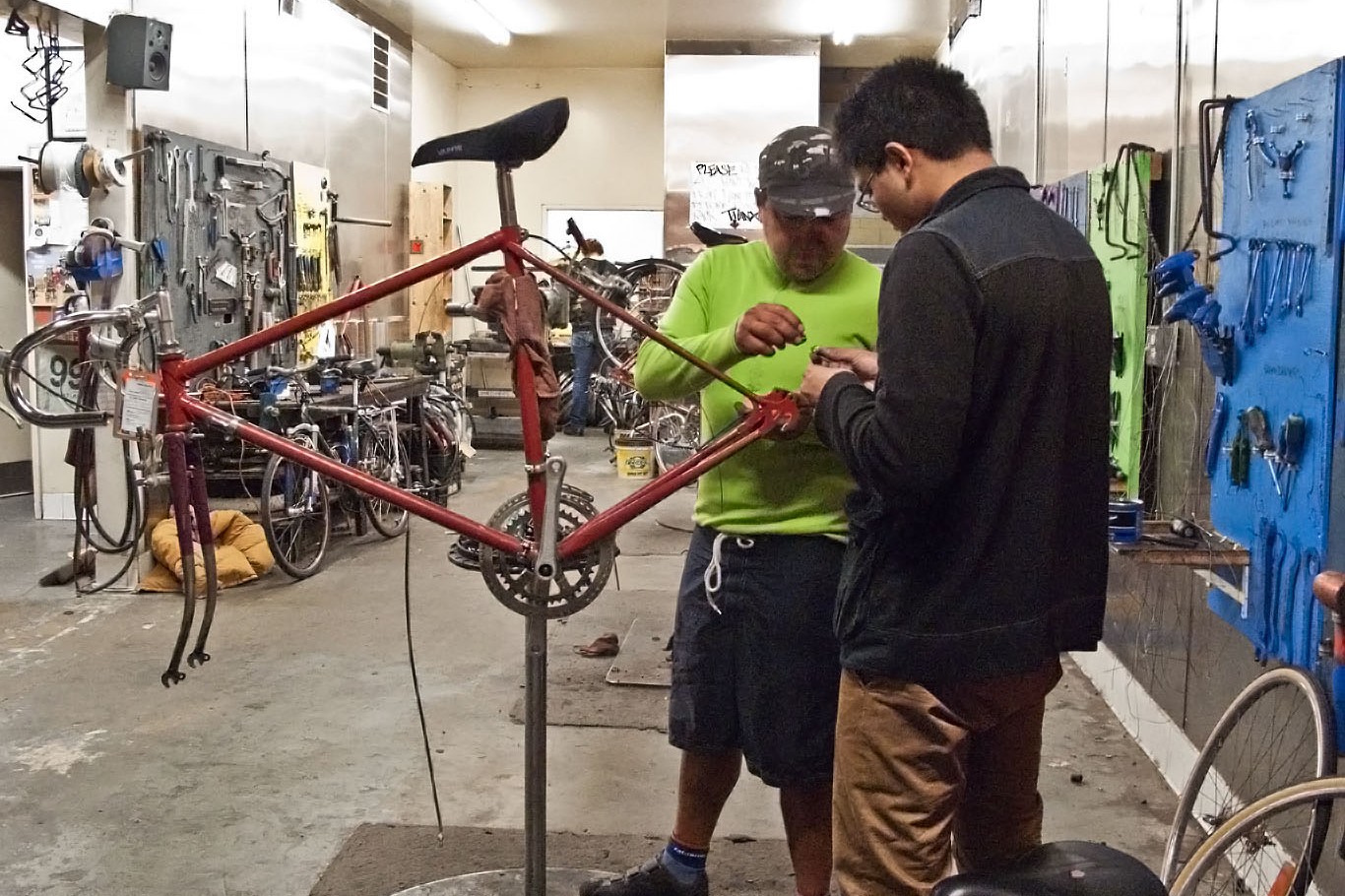
Here’s what a stand actually buys you. With the bike clamped at working height, the wheels spin freely, so you can check brake rub, watch the chain move through the gears, and true a wobble with your hands free to work. You can flip the bike around with a 360-degree rotating clamp instead of flipping the bike. You can stand upright instead of crouching. Small jobs get done instead of deferred — and deferred jobs are how a bike turns into a garage ornament.
The math is straightforward too. A repair stand costs somewhere between a budget model and a premium one, roughly the same as one or two professional shop visits. Once it’s in your garage, every adjustment you do yourself is money you keep, and every inspection you actually bother to do is a problem you catch early. That’s the whole pitch. Now let’s look at the stands worth your money.
What to Look for in a Bike Repair Stand
Before the picks, here’s what separates a stand you’ll use for a decade from one that ends up on the curb.
Clamp quality
The clamp is the business end of the stand — it holds your bike up and grips it securely without damaging anything. Look for a clamp that opens and closes with one hand, rotates 360 degrees, and has rubber jaw covers to protect your finish. Always clamp the seatpost, not the frame — thin-walled aluminum and carbon frames can crush under clamp pressure, while seatposts are built to take it. Every stand on this list clamps the seatpost by default.
Weight capacity
This matters more than it used to, because e-bikes exist. A typical road bike weighs 17–25 pounds; a mid-range mountain bike runs 28–35; an e-bike can easily push 50–70 pounds. Buy more capacity than you need today, because your next bike might be heavier than your current one. A stand rated for 80+ pounds handles everything short of a cargo bike.
Stability
Stability comes from a wide base, rigid construction, and the bike’s weight hanging close to center. All-steel stands weigh more but feel planted; lightweight aluminum tripods are easier to move and store. Nothing ruins a repair session like a stand that rocks every time you break a bolt loose.
Portability and storage
A stand you can’t store is a stand that lives in your way. Look for legs that fold flat against the mast so it can lean in a corner or hang on a wall hook. If you race or do events, stand weight matters — hauling a 17-pound stand to the parking lot gets old fast.
Tool tray
A tray that keeps bolts, chain links, and your multi-tool from rolling under the workbench is a genuinely useful feature, not a gimmick. Some stands include one; on others it’s an add-on. Don’t pay much extra for it — a magnetic parts tray from the hardware store works fine — but an included tray is a nice plus.
Our Picks: The Best Bike Repair Stands for Home Mechanics
These picks are based on published specifications, current pricing, and the consensus of long-term owner reviews and major 2026 review roundups. We don’t claim to have tested them in our garage — we read the specs, read what owners report after months of use, and compared honestly.
1. Best Overall: Park Tool PCS-10.3 Deluxe Home Mechanic Repair Stand
Price: around $280 | Weight capacity: 80 lbs (36 kg) | Stand weight: 16 lbs | Height range: 39″–57″
This is the reference standard, and it’s the reference standard for a reason. Park Tool basically invented the home repair stand category, and the PCS-10.3 is the current version of the design shops have trusted for years. The 2026 roundups (GearJunkie, OutdoorGearLab) both name it the best value of the premium stands, and owners report using them for a decade or more without a hiccup.
What you get: an all-steel frame with teardrop-shaped tubing that resists twisting when you’re really leaning on a wrench — GearJunkie’s testers broke a 54 Nm crank bolt loose with no drama. The cam-actuated clamp opens and closes one-handed, fits tubes and seatposts from 7/8″ to 3″ in diameter (including aero and dropper posts), rotates a full 360 degrees, and the clamp height adjusts from 39 to 57 inches with a quick-release lever so you can work seated or standing. The 80-pound capacity covers road bikes, mountain bikes, fat bikes, and most e-bikes. An integrated height-adjustable parts tray is included.
The trade-offs: at 16 pounds it’s one of the heavier stands here, and it folds to about 43″ x 14″ x 10″ — compact enough to lean in a corner, but not something you’ll want to carry to race day. Assembly takes about ten minutes out of the box. Some owners note the rotational clamp adjustment can get sticky over time — a drop of lube on the mechanism sorts it out.
Buy it if: you want one stand that does everything and will still be going strong in ten years. If your bike collection includes an e-bike, this is the safe default. Check the current price on Amazon.
2. Best for Travel and Easy Storage: Feedback Sports Sport Mechanic 2.0
Price: $250 | Weight capacity: 85 lbs | Stand weight: 12.4 lbs | Clamp height range: 42″–66″
Feedback Sports rebuilt its most affordable stand for 2025–2026, and the 2.0 is a genuinely upgraded tool: redesigned clamp arm internals with more than double the rotational holding power, a sturdier mast collar, silver-anodized aluminum tripod legs for corrosion resistance, and a compact tool tray now included in the box. At 12.4 pounds it’s nearly four pounds lighter than the Park Tool, and it folds down to a slim 5″ x 6.5″ x 45″ package that leans unobtrusively in a corner or rides in the back of the car.
The tripod base spreads to a 54-inch diameter stance, which gives it excellent stability for its weight, and the 85-pound capacity actually edges out the Park Tool on paper — enough for e-bikes. The spinner-knob clamp fits tubes up to 1.9″ in diameter, and Feedback backs it with a 3-year warranty.
The trade-offs: a tripod can rock if the bike’s weight isn’t centered between the legs — keep the clamp arm centered and you’ll be fine. Reviewers note a bit of flex with bikes over 50 pounds, and the stand lacks some of the premium convenience features of Feedback’s pricier models. It’s a workhorse, not a luxury item.
Buy it if: you want a stand that’s easy to carry, quick to fold, and disappears into a corner — and you’d like to save about thirty bucks over the Park Tool while keeping the high weight capacity. Check the current price on Amazon.
3. Best Budget Pick: BikeHand YC-100BH
Price: around $129 list (often less) | Weight capacity: 55 lbs | Stand weight: ~11 lbs | Clamp opening: 2.6″
The BikeHand YC-100BH is the pick for the cyclist who wants a real stand without spending real-stand money — and it’s the one OutdoorGearLab named best bang for the buck in their 2026 roundup. At roughly half the price of the premium models, it does the core job well: it holds your bike off the ground at a workable height, the clamp rotates 360 degrees, a tool tray is included, and at about 11 pounds it folds small enough to travel with.
The honest trade-offs: there’s a lot of plastic in the clamp head and rotating mechanism, and reviewers who wrench daily report the angle-lock teeth can wear over time. It’s less stable than the stands above, especially at maximum height or with bikes approaching the 55-pound limit. The height adjustment range is smaller too. But for occasional home use — a tune-up a month, seasonal maintenance, cleaning — owners report it holding up fine for years. BikeHand backs it with a 5-year warranty and sells spare parts directly, which is better coverage than most budget stands offer.
Buy it if: you’re just getting into home maintenance and want to see how much you’ll actually use a stand before committing $250–$280. The fix-vs-shop math still works — it pays for itself the first time you skip a shop visit. Just keep it under 50 pounds of bike and don’t expect it to behave like a $280 stand. Check the current price on Amazon.
4. Best for E-Bikes and Heavy Bikes: Feedback Sports Pro Mechanic HD
Price: around $525 | Weight capacity: 100 lbs (45 kg) | Stand weight: 18 lbs | Clamp opening: up to 2.6″
If your household runs e-bikes — the kind that weigh 55–70 pounds — the standard home stands are working near their limits, and that’s where the Pro Mechanic HD earns its price. It’s a beefed-up version of Feedback’s award-winning design with oversized anodized aluminum tubing, a speed-ratchet clamp that closes faster than the spinner style, and a 100-pound capacity that’s the highest on this list. OutdoorGearLab’s 2026 roundup rated it the best overall work stand.
The trade-offs are obvious: $525 is serious money, and at 18 pounds it’s the heaviest stand here. This is overkill for a 20-pound road bike. But if you’re wrestling a 65-pound e-MTB onto a stand, “overkill” is exactly what you want holding it.
Buy it if: heavy e-bikes are in the household, or you’re the friend everyone brings their bikes to. Check the current price on Amazon.
5. Best for Travel and Race Day: Altangle Hangar Connect
Price: $265–$299 | Weight: 3 lbs | Bike weight limit: around 20–50 lbs depending on mount
The Hangar Connect is a different species: instead of a floor stand, it’s a compact clamp arm that mounts onto a table edge, tailgate, railing, or anything else solid. At 3 pounds and roughly the size of a water bottle, it qualifies as carry-on luggage, and OutdoorGearLab scored it a perfect 10 for portability.
The catch: it’s a travel and event tool, not a daily home stand. Mounted on a wobbly surface it performs like a wobbly stand, and reviewers report it handles bikes over 20 pounds poorly when the mount isn’t ideal. At $265–$299 it costs as much as a real floor stand while doing less. Buy it only if you specifically need a stand that fits in a travel bag — otherwise, one of the floor stands above gives you more for the money.
Buy it if: you fly or drive to events and need a repair stand that disappears into your luggage. Check the current price on Amazon.
Quick Comparison
| Stand | Price (approx.) | Weight capacity | Stand weight | Best for |
|---|---|---|---|---|
| Park Tool PCS-10.3 | $280 | 80 lbs | 16 lbs | Most home mechanics — the safe default |
| Feedback Sports Sport Mechanic 2.0 | $250 | 85 lbs | 12.4 lbs | Light, portable, easy storage |
| BikeHand YC-100BH | $129 | 55 lbs | ~11 lbs | Budget entry into home maintenance |
| Feedback Sports Pro Mechanic HD | $525 | 100 lbs | 18 lbs | Heavy e-bikes |
| Altangle Hangar Connect | $265–$299 | ~20–50 lbs* | 3 lbs | Travel and race day |
*Hangar Connect capacity depends on the mounting surface.
How to Use a Repair Stand Without Damaging Your Bike
Five rules that keep your bike (and the stand) happy:
- Clamp the seatpost, not the frame. This is the big one. Modern frames — especially carbon — are thin-walled where they’re not reinforced, and a clamp can crush them. The seatpost is designed to take clamping force. If your seatpost is carbon, snug the clamp gently; if in doubt, clamp a cheap alloy seatpost you keep for maintenance.
- Extend the seatpost a few inches before clamping. Clamping high on the post gives the clamp more tube to grip and keeps the jaws off the frame’s seat tube junction.
- Center the weight between the legs. On a tripod stand, keep the clamp arm roughly centered over the tripod. Swinging a heavy bike way off to one side is how stands tip.
- Don’t exceed the rated capacity. The weight limit assumes the bike hangs centered and balanced. A 70-pound e-bike on a 55-pound-rated budget stand is asking for a very expensive bad day.
- Close the clamp with care around cables. Rotate the clamp so the jaws land on a clean section of seatpost, not on a dropper-post cable or seat-tube battery wire.

Accessories Worth Adding Later
You don’t need any of these on day one, but once the stand becomes part of your routine, a few add-ons earn their keep. A magnetic parts tray sits on the workbench and keeps bolts from vanishing. A front-wheel stabilizer — some stands include one, others sell it separately — stops the handlebars from flopping sideways when the front wheel is off, which makes brake and headset work far less annoying. And a shop apron with pockets beats wiping greasy hands on your shorts, though your shorts will never know the difference.
Park Tool also sells add-ons that dock into the PCS-10.3’s accessory ports, like a larger work tray and a paper towel holder. They’re nice-to-haves, not must-haves. Start with the stand, use it for a month, and you’ll know exactly which accessory you’d actually reach for.
The Bottom Line: Fix vs. Shop
A repair stand doesn’t fix anything by itself — but it removes the excuse not to. With the bike at working height and the wheels spinning freely, you’ll actually do the seasonal tune-up, catch the fraying cable, and notice the brake pads are down to the wear line before they score the rim. Every one of those jobs is one you’d either pay a shop for or put off until something broke.
If you take nothing else from this guide: the Park Tool PCS-10.3 is the stand to buy if you just want the right answer — it’s been the reference standard for years and the current version is better than ever. Want to spend less? The Feedback Sports Sport Mechanic 2.0 gets you nearly there for $30 less and folds smaller. On a tight budget, the BikeHand YC-100BH will get you started.
A stand is just the beginning of the home shop. Up next on Repair My Bicycle, we’ll cover the essential hand tools every home mechanic actually needs — the beginner kit that pairs with your new stand and handles 90% of common repairs.
Follow Repair My Bicycle on Facebook for more guides and tips: https://www.facebook.com/repairmybicycle
Photo Credits
Bike clamped in a repair stand: Downtowngal, via Wikimedia Commons (CC BY-SA 4.0). Home bike workshop: Alextredz, via Wikimedia Commons (CC BY-SA 4.0). Bike parts on a work bench: Alextredz, via Wikimedia Commons (CC BY-SA 4.0). Bike repair shop: Ibnebattutas, via Wikimedia Commons (CC BY-SA 4.0).