Best Floor Pumps for Bikes (2026): The One Tool Every Cyclist Actually Needs
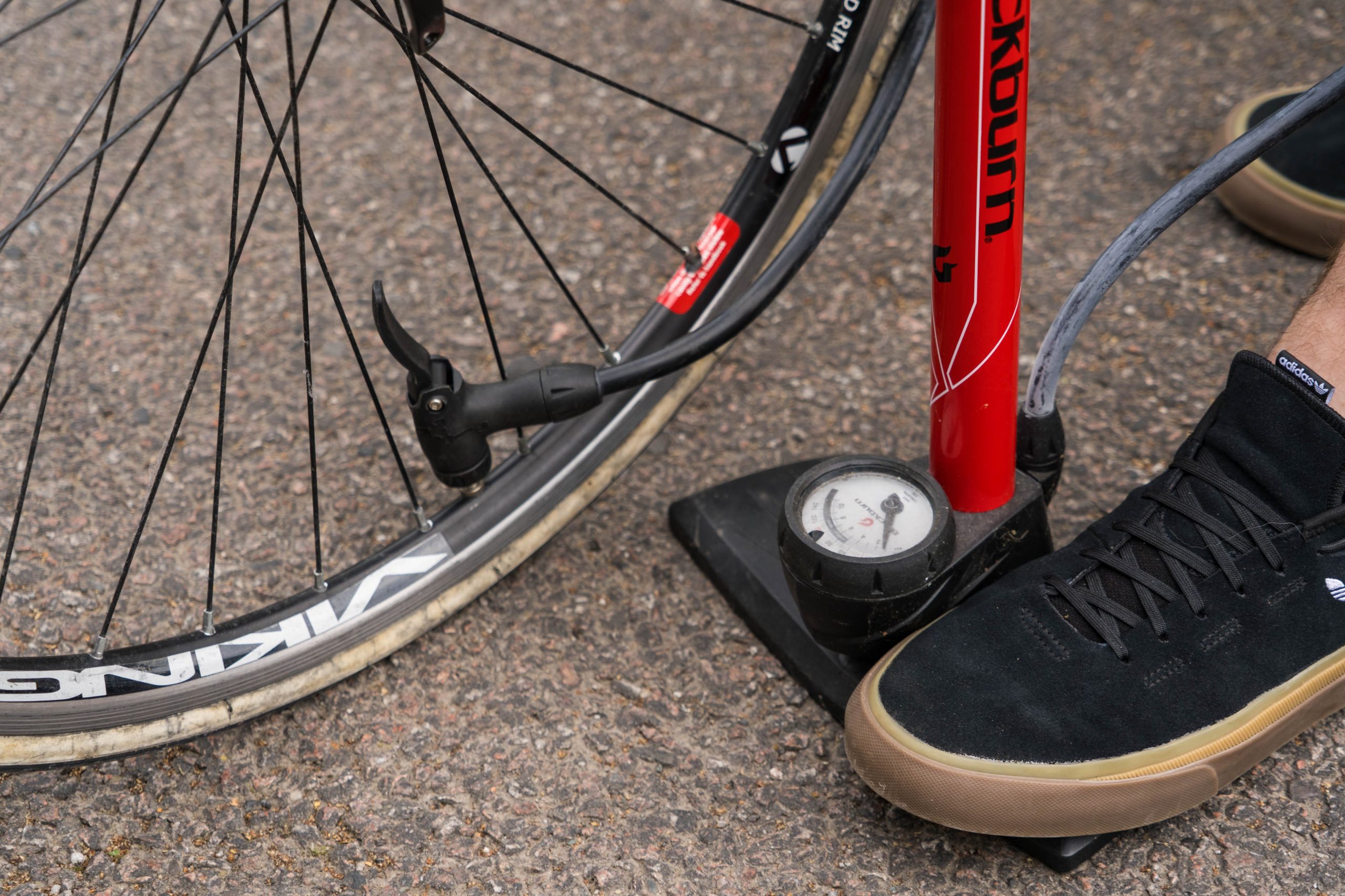
If you buy exactly one tool for your bicycle, make it a floor pump with a gauge. Not a multi-tool, not a repair stand, not a fancy lube. A floor pump. Nothing else you own will get used as often, and nothing else this cheap keeps your bike rolling this well. Tires lose air every week whether you ride or not, and riding on soft tires is the fastest way to feel slow, handle badly, and pinch-flat your way into buying tubes you did not need.
A good floor pump turns a chore into a two-minute habit. A bad one turns it into a wrestling match with a leaky valve head and a gauge you cannot read. This guide covers how to pick the right pump for your bikes and which ones are actually worth buying, based on current specs, street prices, and what owners consistently say after living with these pumps for years.
As an Amazon Associate, Repair My Bicycle earns from qualifying purchases.
Quick picks
- Best overall: Topeak JoeBlow Sport III, around $70. The default choice for most home cyclists: sturdy, accurate enough gauge, easy valve head, fills everything from road tires to commuter hybrids.
- Best for high pressure and hard use: Lezyne Sport Floor Drive, around $65. Steel barrel, 220 psi ceiling, long hose, built to survive years of daily pumping.
- Best budget: Vibrelli Performance Floor Pump, around $35. The cheapest pump that still works properly, with a gauge and both valve types.
- Best for tubeless tires: Blackburn Chamber Tubeless, around $200. Reservoir pump that blasts a stored charge of air to seat stubborn tubeless beads.
- Best premium: Silca Pista Plus, around $199. The buy-it-for-decades pump with a rebuildable design and an exceptionally accurate gauge.
- Best for mountain bikers: Specialized Air Tool MTB, around $90. High-volume barrel and a precise low-pressure gauge made for fat tires.
Why a floor pump, and why it needs a gauge
Every tire leaks air slowly through the tube or the tubeless sealant. Road tires can lose noticeable pressure in a week; mountain tires in a few days. The correct pressure is not a detail, it is the single biggest variable in how your bike rides. Too low and you get squirmy handling, extra rolling resistance, and pinch flats. Too high and you get a harsh, skittery ride with less grip.
A floor pump solves this because it does three things a mini pump cannot do well: it stands on its own so you use both hands and your body weight, it moves a lot of air per stroke, and its built-in gauge tells you when to stop. Pumping blind with a gaugeless mini pump is guessing, and guessing is how you end up at 50 psi on a road tire rated for 90.
The shop math is simple. A floor pump costs $35 to $70 for the ones most people should buy. A bike shop will happily top up your tires, but driving there and waiting in line to do it weekly is silly. One avoided pinch flat saves a tube ($8 to $12), a CO2 cartridge ($3 to $5), and a roadside repair. The pump pays for itself in a season, then keeps paying.
What actually matters when choosing
Valve compatibility: Presta vs. Schrader
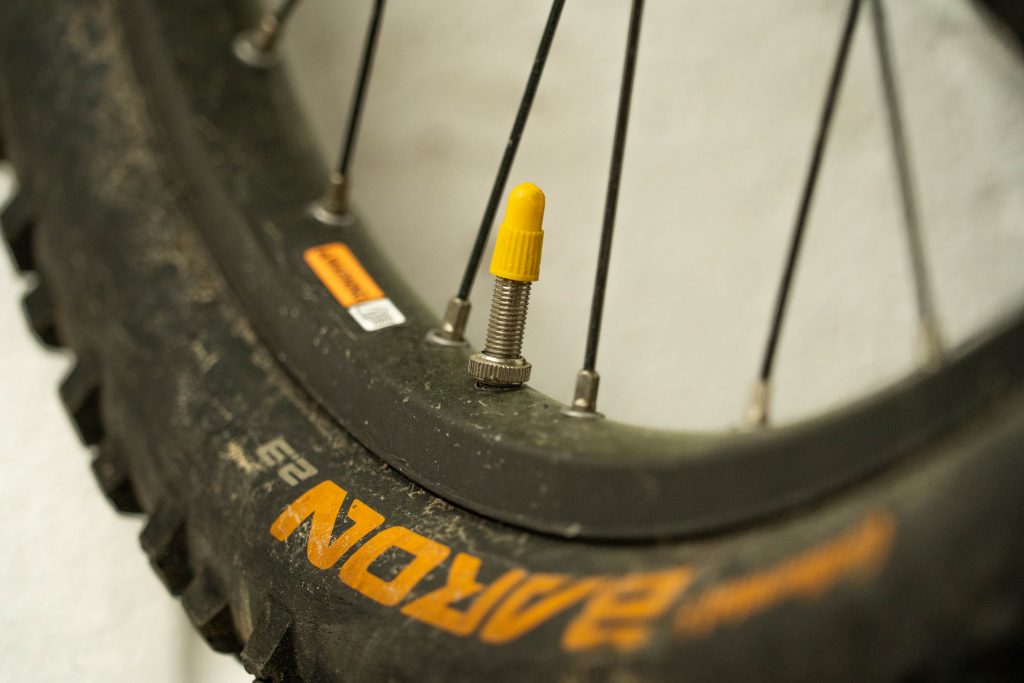
Bikes use two valve types. Presta is the skinny one with the little lock nut, found on most road, gravel, and nicer mountain bikes. Schrader is the fat one like a car valve, common on hybrids, kids bikes, and budget mountain bikes. Every pump on this list handles both. What differs is HOW: some heads have two holes (one per valve type), some auto-adjust, and some use a single head you reconfigure. Two-hole heads like Topeak’s are foolproof. Thread-on heads like Lezyne’s seal superbly but take a few extra seconds. If your household has both valve types, this matters more than the gauge.
Gauge accuracy
A gauge only helps if you can trust it. Base-mounted gauges are the standard: bigger, easier to read, and kept out of the airflow path. Top-mounted gauges (near the handle) are more fragile and harder to read mid-stroke. Accuracy to within a few psi is what you want. You do not need 1 percent laboratory accuracy, but you do want the needle to land in the same place twice. Cheap pumps with tiny, jittery dials are the number one source of owner complaints across every price bracket.
High pressure vs. high volume
Pumps come in two personalities. High-pressure (HP) pumps have narrow barrels: each stroke moves less air, but it takes real effort to push past 100 psi. They suit road tires in the 80 to 120 psi range. High-volume (HV) pumps have fat barrels: they fill big mountain and gravel tires fast, but getting a road tire to 100 psi feels like pushing against a wall. Most home pumps split the difference and work fine for everything. If you ONLY ride mountain bikes, a dedicated high-volume pump like the Specialized Air Tool MTB is a joy. If you only ride road, a high-pressure pump reaches the top end easier.
Barrel material and build
Steel barrels are the sweet spot: heavy enough to feel planted, durable, and affordable. Aluminum is lighter and resists corrosion. Cheap plastic barrels are the ones that crack at the base after two winters in a cold garage. The handle should be comfortable for your hand under real force, and the base should be wide enough that the pump does not tip when you really lean into a stroke. A long hose (40 inches plus) is an underrated luxury: it reaches both wheels while the bike sits in your repair stand or leans against the wall.
Tubeless: do you need a reservoir pump?
If you run tubeless tires, you know the problem: the tire bead will not always seat with a normal pump because the air escapes faster than you can push it in. Reservoir (or “charger”) pumps store a blast of compressed air and release it all at once to pop the bead into place. If you set up tubeless tires more than once a year, a reservoir pump earns its keep. If you never will, save your money.
The picks
Best overall: Topeak JoeBlow Sport III
The JoeBlow Sport III is the pump most cyclists should buy, and it is the best-selling floor pump in North America for good reason. Around $70 gets you a 160 psi ceiling, a big easy-to-read 3-inch base gauge, and Topeak’s TwinHead DX valve head, which has separate openings for Presta and Schrader so there is nothing to reconfigure or guess about. Push the head on, flip the lever, pump. It works for road, gravel, hybrid, and most mountain tires, which covers nearly every home garage.
Owners consistently praise the same things: the head seals on the first try, the gauge is readable from standing height, and the steel barrel survives being knocked around a garage. Common gripes are minor: the 30-inch hose is shorter than some rivals, so you move the pump around more, and the plastic handle is comfortable but not luxurious. Neither is a dealbreaker. If you own one bike or five and want a pump that just works every time, this is it.
Specs: 160 psi max, 3-inch analog base gauge, 30-inch hose, Presta and Schrader via TwinHead DX, steel barrel. Around $70.
Best for high pressure and hard use: Lezyne Sport Floor Drive
If you ride road and like your tires at 90 to 110 psi, or you simply want a pump built like a tool rather than a toy, the Lezyne Sport Floor Drive is the pick. Around $65 buys a steel barrel rated to a 220 psi ceiling, a long 51-inch hose that reaches either wheel without dragging the pump across the garage, and Lezyne’s ABS chuck, which threads onto the valve and vents excess air with a little button so you can bleed down to an exact pressure.
The thread-on head is the defining feature and the defining tradeoff. It seals as reliably as any head on the market, which is why mechanics like it, but it takes a few more seconds to attach and detach than a flip-lever head. At very high pressures it is genuinely the easiest head to work with. The analog gauge is clear and consistent. Owners report these pumps lasting a decade of daily use, and Lezyne sells rebuild kits, which is a rarity in this price class and a real mark of quality.
Specs: 220 psi max, analog base gauge, 51-inch hose, ABS thread-on Presta/Schrader chuck, steel barrel. Around $65.
Best budget: Vibrelli Performance Floor Pump
Cheap floor pumps are usually a trap: flimsy bases, gauges that lie, heads that hiss air around the valve. The Vibrelli Performance is the exception that proves the budget tier CAN work. Around $35 gets you a 160 psi max, a readable base gauge, both valve types, and a steel barrel. It is not the smoothest pump and the plastic fittings will not outlive you, but it inflates tires to correct pressure reliably, which is the entire job.
Be honest with yourself about volume here. If you will pump tires twice a week for the next five years, the Topeak or Lezyne is the better buy per year of service. But if you ride occasionally, or you are outfitting a household on a budget, this pump does the job that matters. Also worth a look at the same end of the market: the Schwinn Air Center Plus, usually around $45, which moves a lot of air per stroke and has earned a loyal following as a garage workhorse.
Specs: 160 psi max, analog base gauge, Presta and Schrader head, steel barrel. Around $35.
Best for tubeless: Blackburn Chamber Tubeless
Tubeless setup is the one job a normal pump sometimes cannot do. The Blackburn Chamber Tubeless solves it with an air reservoir built into the base: pump it up, open the valve, and the stored charge pops the tire bead onto the rim in one shot. Around $200, 160 psi max, analog gauge, 62-inch hose, and it works as a perfectly normal floor pump the rest of the year.
Two honest caveats. First, this is a heavy, bulky pump; it lives in the garage, not in a travel kit. Second, if you run tubes and never plan to go tubeless, you are paying double for a feature you will never use. The main alternative is the Topeak JoeBlow Booster (around $220) with the same reservoir concept, or the Bontrager TLR Flash Charger (around $175) with a digital gauge. Any of the three ends the tubeless bead battle.
Specs: 160 psi max, reservoir chamber, analog gauge, 62-inch hose, Presta and Schrader. Around $200.
Best premium: Silca Pista Plus
The Silca Pista Plus is for the rider who has bought their last floor pump. Around $199 gets you a beechwood handle that feels right in your hand, a leather piston gasket like the pumps of decades past, a gauge owners describe as dead accurate, and a fully rebuildable design with every part replaceable. Max pressure is 120 psi, which covers every tire you should actually be running (and is a quiet argument that 130-psi road tires belong to the past).
Is it three times better than the Topeak? No, and Silca would not claim that. What you are buying is precision, repairability, and the pleasure of using a tool that was designed to be serviced, not replaced. For most riders this is a want, not a need. But if you pump tires daily, own multiple bikes, and appreciate tools that outlast trends, the Pista Plus has a devoted following that is unusually hard to argue with.
Specs: 120 psi max, high-accuracy analog gauge, 40-inch hose, Presta and Schrader head, alloy barrel with leather gasket, fully rebuildable. Around $199.
Best for mountain bikers: Specialized Air Tool MTB
Mountain bike tires want low pressure, high volume, and a gauge that can tell the difference between 24 and 28 psi. The Specialized Air Tool MTB is built exactly for that: a high-volume barrel that fills big tires fast, a large low-pressure gauge that is accurate within about 1 psi in the range that matters, and a stable steel base with a head that seals without fuss. Around $90, max 40 psi.
That 40 psi ceiling is the whole story: this pump will not inflate a road tire, and it is not supposed to. If your fleet is all mountain bikes, it is the best-feeling pump you can buy. If you also own a road bike or a hybrid, you need a general-purpose pump too, and one of the picks above is the better first buy.
Specs: 40 psi max, low-pressure analog gauge, high-volume barrel, Presta and Schrader head, steel base. Around $90.
Quick comparison
- Topeak JoeBlow Sport III: 160 psi, 3-inch gauge, twin-head, around $70. The default.
- Lezyne Sport Floor Drive: 220 psi, 51-inch hose, thread-on head, around $65. The durable one.
- Vibrelli Performance: 160 psi, basic but honest, around $35. The budget one.
- Blackburn Chamber Tubeless: 160 psi plus reservoir, 62-inch hose, around $200. The tubeless one.
- Silca Pista Plus: 120 psi, rebuildable, around $199. The forever one.
- Specialized Air Tool MTB: 40 psi, high volume, around $90. The mountain one.
How to use a floor pump properly
It is a simple tool, but small habits make it work much better:
- Check the target pressure first. Look at the sidewall of the tire, which prints a recommended range (for example, 50 to 70 psi). Start in the middle of that range. Heavier riders and rough roads favor the higher end; lighter riders and smooth pavement favor the lower end.
- Open the valve. On a Presta valve, unscrew the little lock nut at the tip and tap it once to break the seal. On a Schrader valve, just remove the cap. Make sure the valve stem is straight and centered in the rim hole.
- Attach the head firmly. Push the pump head straight onto the valve, then lock it (flip the lever, or thread it on for Lezyne-style heads). Give the hose a gentle tug: if it comes off, it was not seated. A head that leaks around the valve will read low on the gauge and waste your effort.
- Pump with your body, not your arms. Stand with the base between your feet, grip the handle with both hands, and use straight up-and-down strokes driven from your shoulders and body weight. Short choppy strokes at the top are fine for the first fills; use full smooth strokes as pressure builds.
- Read the gauge at the bottom of the stroke. Pressure reads highest while you are pushing. Pause at the bottom of a stroke for the true reading, then stop when you hit your target.
- Detach quickly and cleanly. Unlock the head and pull straight off. A tiny puff of air escaping is normal and does not change the tire pressure meaningfully.
- Close the valve and cap it. Screw the Presta lock nut back down finger-tight, replace the cap. Done.
If the gauge barely moves while you pump, the head is not sealed on the valve. Detach, re-seat it straight, and try again before assuming the pump is broken.
How often to check, and what pressure to run
Check pressure weekly if you ride regularly, and always before a long ride. Tubes lose roughly 5 to 10 psi a week; tubeless setups can lose air faster in the first days after sealant is added. A tire that was perfect last month is not perfect now.
Rough starting points (always confirm against your tire’s sidewall range and your bike manual):
- Road tires (25 to 32 mm): 70 to 100 psi. Wider tires run lower; modern 28 to 32 mm tires rarely need more than 80 to 85 psi for most riders.
- Gravel tires (35 to 45 mm): 35 to 55 psi.
- Mountain bike tires (2.1 to 2.6 in): 22 to 32 psi.
- Hybrid and commuter tires: 50 to 70 psi.
Two rules of thumb beat any chart: if you feel the rim bottom out on a pothole, add air; if the ride feels harsh and skittery with no grip, let some out. Small adjustments of 3 to 5 psi are noticeable.
Floor pump vs. mini pump vs. electric inflator
A floor pump is the home tool. A mini pump is the roadside tool. They are not substitutes, and every cyclist eventually owns both. For the trail or roadside kit, our next guide covers multi-tools and portable pumps; the mini pump’s job is getting you home, not hitting exact pressure.
CO2 inflators are the third option: tiny, fast, and beloved by racers. One cartridge fills one tire, they cost a few dollars each, and they are single-use. Fine as a backup, expensive and wasteful as a routine solution.
Electric inflators are the newest category. Cordless models with auto-shutoff at a target pressure genuinely work and are great for riders with hand or shoulder issues, or anyone who wants push-button convenience. They max out around 100 to 150 psi, cost $50 to $120, and need charging. They do not replace a floor pump’s speed and simplicity for most people, but they are a legitimate option worth knowing about.
Maintenance: make it last
A floor pump needs almost no care, which is part of the appeal. Keep it indoors or at least dry; a pump that lives in a damp shed will corrode at the fittings. Every year or two, put a drop of light oil on the piston (unscrew the top cap on most models) and wipe the valve head clean. If a Lezyne-style thread-on head starts leaking, the rubber gasket inside is a cheap replaceable part. If a flip-lever head gets loose, many can be tightened or rebuilt with a kit. A $65 pump that lasts ten years costs you less than a dollar a month.
FAQs
Do I really need a gauge?
Yes. Without one you are guessing, and the difference between 60 and 90 psi is the difference between a good ride and a bad one. Every pump in this guide except the mountain-specific Specialized has a gauge; treat a gaugeless floor pump as a non-starter.
Can I just use a gas station air compressor or my car pump?
You can, but it is a blunt instrument. Compressors blast air fast with no finesse, and overshooting on a bike tire is easy. A floor pump gives you control and a reading. Schrader-valve bikes technically fit compressor chucks, but a $70 pump is cheaper than the gas you will burn driving to the station all year.
Why does my pump head not fit my valve?
Nine times out of ten, you are using the wrong hole on a dual-head pump, or a thread-on head is not threaded on far enough. Check which valve you have (skinny with a lock nut means Presta), match it to the right side of the head, and push it on straight. If it is a Schrader valve, the little pin inside the head must depress the valve core.
How long should a floor pump last?
A decent one: many years, often a decade. The parts that wear are gaskets and valve heads, and the better brands sell rebuild kits. The pumps that die young are the ultra-cheap ones with plastic barrels and bases that crack. Spending $60 to $70 instead of $25 is usually the difference between a tool and a toy.
Is a digital gauge worth it?
Digital gauges are easier to read and often more precise, but they need batteries and cost more. For most riders, a good analog gauge is accurate enough and never needs a battery. Go digital if you chase exact pressures on a road bike; otherwise save the money.
The bottom line
A floor pump with a gauge is the highest-value tool in cycling. It costs less than two tanks of gas, gets used weekly for a decade, and quietly prevents the flats, the slow rides, and the ruined mornings that make people fall out of love with their bikes. Buy the Topeak JoeBlow Sport III if you want the safe default, the Lezyne Sport Floor Drive if you want the toughest one, and the Vibrelli Performance if the budget is tight. Then go check your tires. They are probably softer than you think.
If you are building out the rest of your home workshop, see our essential home bike mechanic tool kit guide for the other tools worth owning, and when you are ready to work at a comfortable height, our bike repair stand guide covers which stand suits your shop.
Follow Repair My Bicycle on Facebook for more practical repair guides: https://www.facebook.com/repairmybicycle